

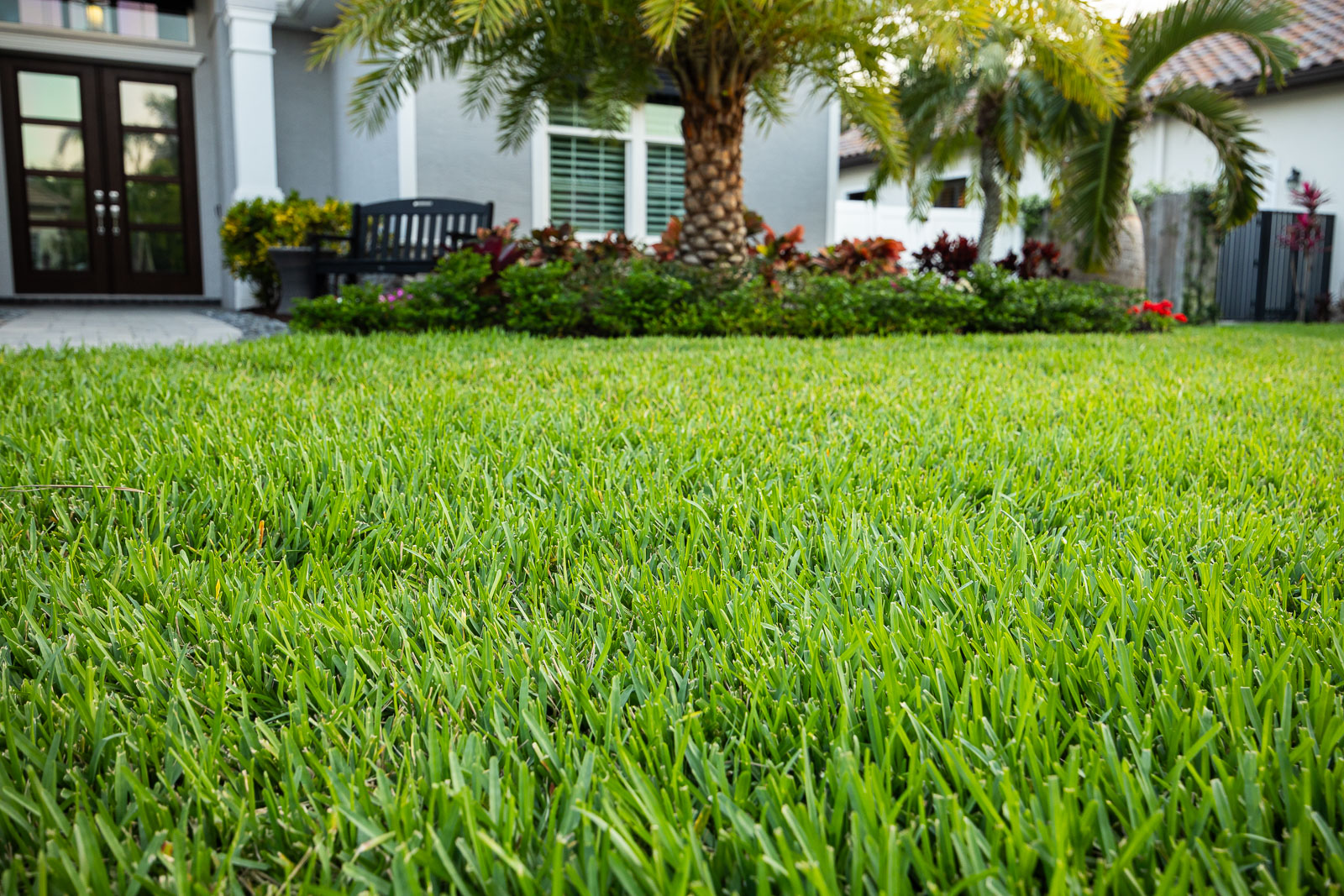
How is feeding your lawn different than feeding your kids?
Let’s see — your lawn doesn’t complain when you give it good nutrients instead of macaroni and cheese.
Thanks, lawn.
Feeding your lawn might seem pretty straightforward, but it’s actually kind of easy to mess up.
What are some common lawn fertilizing mistakes in Florida? Not applying fertilizer often enough. Applying too much fertilizer. Not adding weed control to your fertilizing schedule. Using the wrong blend of fertilizer for your type of lawn.
Let’s learn more about fertilizer application errors, including:
Fertilizer is food for your lawn, and it’s hungry all the time. It’s kind of like a teen-ager who can polish off a frozen pizza and a bag of Oreos and then ask what’s for dinner.
Fertilizer provides your lawn with the nourishment it needs to grow healthy, stay green, and stand strong against insect pests and lawn diseases.
Your lawn goes through a lot — growing, fending off bugs and diseases, getting trampled by kids and dogs and that delivery guy who doesn’t like walkways. It needs constant nourishment just to survive.
A quick look at what this hard-working Florida lawn treatment is doing out there:
Fertilizing seems pretty no-nonsense, right? Toss some down and wait for the magic?
Actually, proper fertilizing is trickier than you think, especially here in Sarasota. It’s pretty easy to make mistakes. Let’s take a look at some common fertilizer errors:
If some fertilizer is good, more is better, right?
Sorry, no.
Yes, fertilizer is super important for a healthy green lawn, but it's possible to apply too much fertilizer to your grass. It’s actually among the most common fertilizer mistakes.
The same helpful nutrients that make your lawn healthy and green will damage your grass if you apply too much.
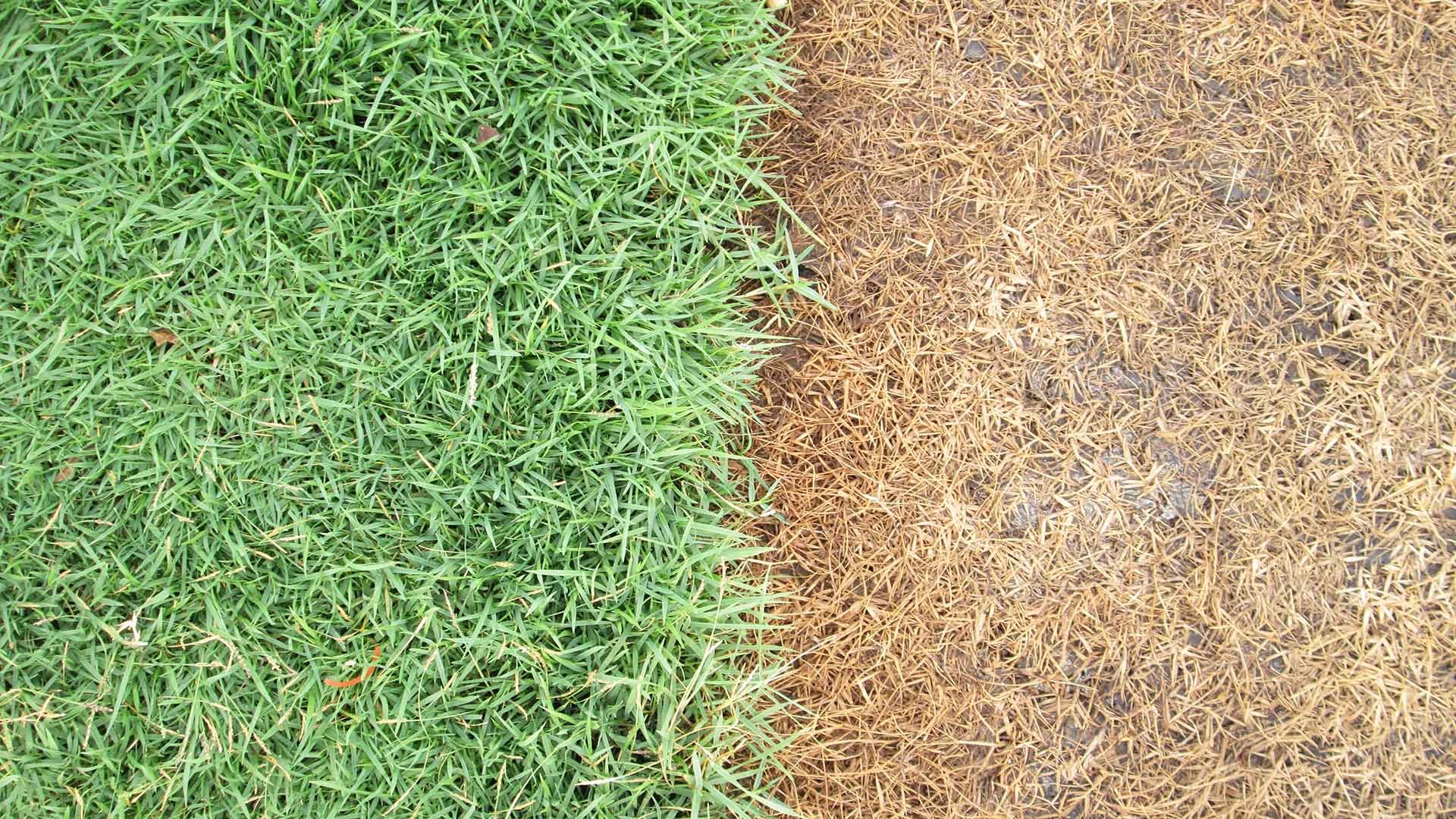
When your lawn is over-fertilized, it can cause what's called "fertilizer burn." Your grass will actually look burned, with ugly discolored patches. Fertilizer contains salts that, in excess, can draw water away from your lawn’s roots, leading to dehydration and damage.
This is a pretty common DIY mistake. Maybe you’re in a hurry and you don’t take the time to read the correct amounts on the label. Maybe that old spreader you’re using hasn’t been properly calibrated since, hmmm, was it ever calibrated?
And do you know the actual square footage of your yard so you can apply the right amount of fertilizer? Who has time for that, right?
There are lots of factors when it comes to proper fertilizing and this Florida lawn treatment can be kind of a pain.
When lawn care pros apply fertilizer, they know exactly how much to use and they have perfectly calibrated equipment to apply just the right amount.
No burn.
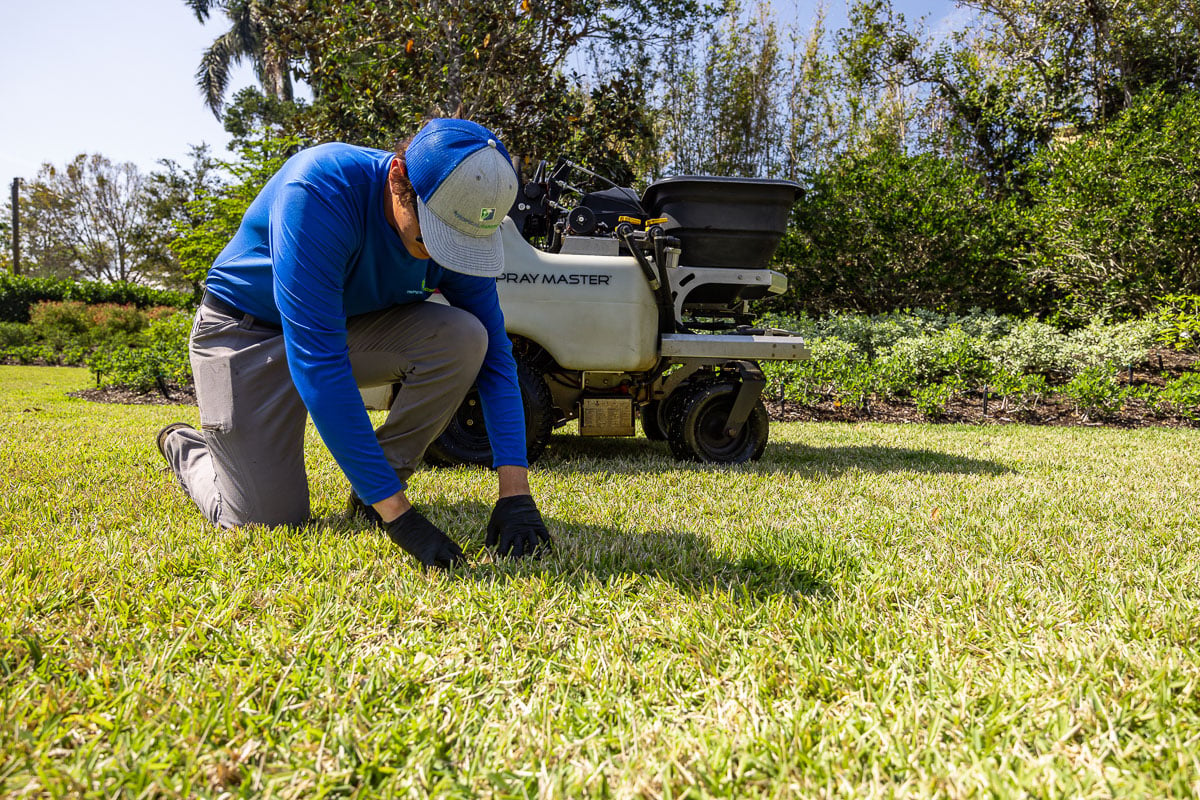
That’s right — too much fertilizer is bad, but not enough is another common fertilizer application mistake.
When a Sarasota lawn care company tells you they’ll apply fertilizer four times a year, that sounds reasonable, right? But that’s actually not often enough if you live in South Florida.
The soil here in Sarasota is sandy, which means it drains really well. You might have noticed water soaks in quickly and drains right through. Well, that means the important nutrients in your fertilizer are draining right through, too. Your lawn barely has time to absorb them.
So Sarasota lawns need more frequent fertilizing in smaller amounts. You want that important lawn food actually feeding your lawn’s roots, not draining right through into the groundwater. Monthly fertilizing is ideal.
Tropical Gardens offers a more frequent lawn fertilizer schedule than many other Sarasota lawn care companies. We visit once a month for 8-10 months of the year, applying smaller amounts of nutrients so they actually sink in and get to work.
Why not 12 months? Good question. Most counties in Florida ban the application of fertilizer that contains nitrogen or phosphorus between June 1 and Sept. 30. Why? It’s to reduce the amount of fertilizer that runs off of properties during summer rainstorms and finds its way into area waterways. Fertilizers can harm aquatic life and spark algae blooms.
So does your hungry lawn just get ignored all summer? Not on our watch.
We still show up, applying iron and helpful micronutrients like magnesium,
zinc, copper, sulphur and manganese to your lawn. All these Florida lawn treatments are allowed during the nitrogen ban months.
Read the label. Read the label. Read the label.
One of our customers bought his own lawn fertilizer, assuming it was fine, and it killed his whole lawn. Oops.
He didn’t notice the fine print on the fertilizer bag that said it wasn’t meant for St. Augustine Floratam lawns. Too much nitrogen in high heat can cause scorching.
Read the small print to avoid costly lawn fertilizer mistakes.
It’s actually a common DIY mistake to use the wrong type of fertilizer.
Different types of grass have different needs when it comes to nutrients.
All fertilizer is labeled with an N-P-K ratio that tells you the percentage of essential nutrients in fertilizers. "N" is for nitrogen, "P" is for phosphorus, and "K" is for potassium.
New lawns need starter fertilizer with higher phosphorus to boost root development, while established lawns generally need more nitrogen to maintain color and density.
Confused by the numbers? Ask a pro.
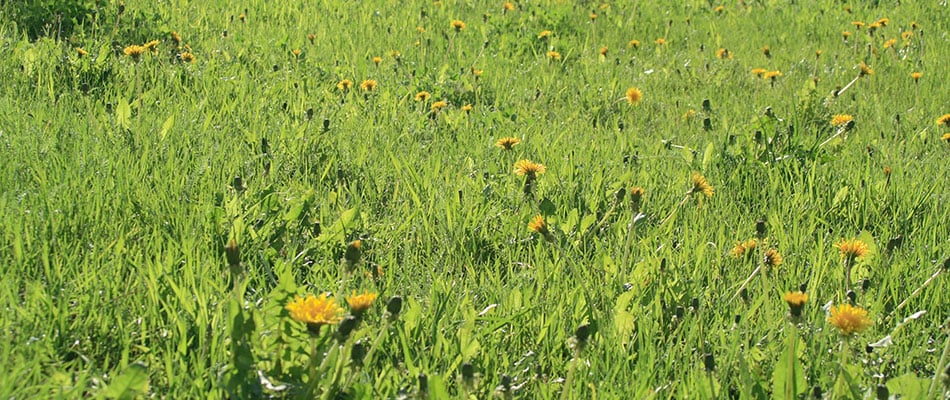
Weeds are sinister little devils that not only look ugly and annoy the heck out of you, they actually steal nutrients from your lawn.
Controlling weeds is as important as feeding your lawn.
Weeds need the same nutrients that your grass needs, and they’re not exactly law-abiding citizens, so they steal the good stuff from your grass.
Weed control will prevent and knock out those greedy weeds so your grass gets all the food it needs. It’s an essential Florida lawn care treatment.
Just when you thought you were getting a handle on this whole fertilizing thing, here’s a fun curveball — you need to switch fertilizer types as the seasons change.
Here at Tropical Gardens, we use a slow-release, high-nitrogen granular fertilizer that hangs in there through the spring rainy season.
But then we switch to a liquid formula after the rainy season to provide a steady push of green through your lawn’s dormant season, November through February. Otherwise, your grass will be brown. That’s no good.
Now that you know what fertilizing mistakes to avoid, maybe you figure you should tackle this chore yourself.
You have plenty of spare time every month, right? You know exactly what type of fertilizer to use and how much to put down? You can probably figure out how to calibrate a spreader — how hard could it be? Wait — do you even have a spreader?
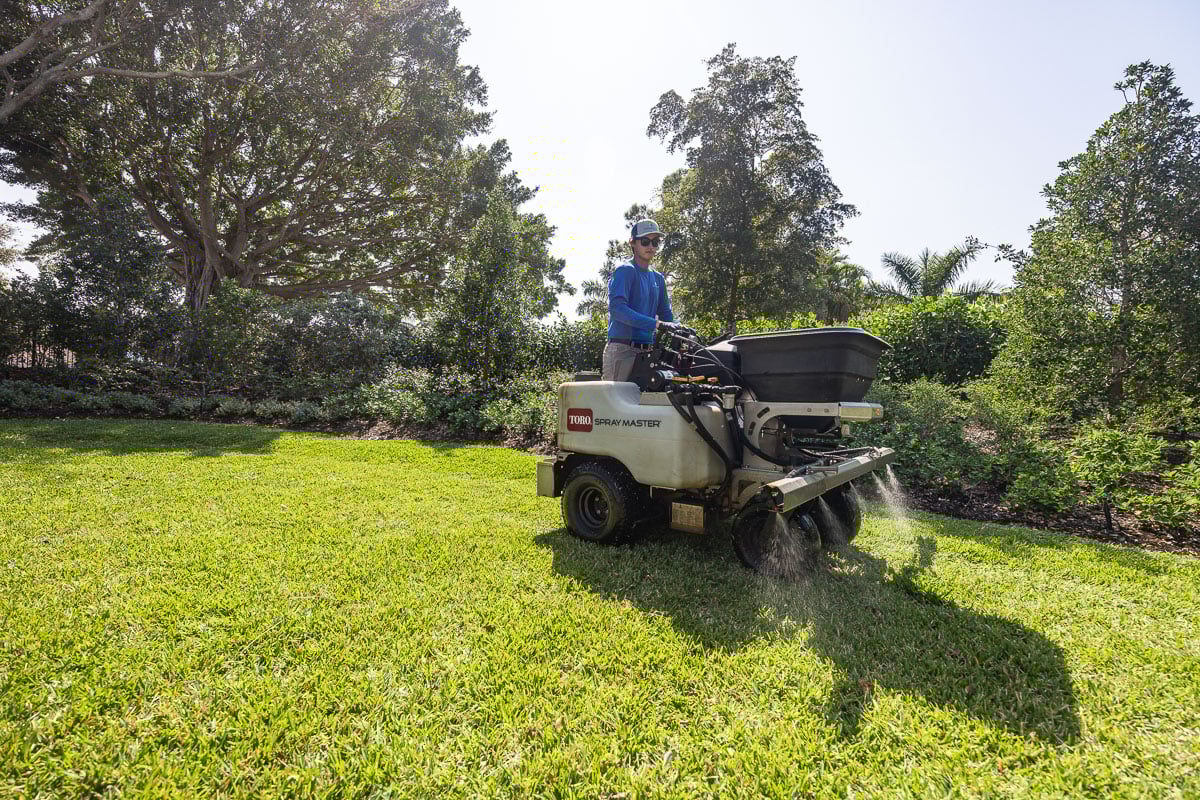
Here at Tropical Gardens, we calibrate our spreaders monthly, spreading fertilizer out on tarps then weighing it to make sure our pros apply exactly the right amount to your lawn.
If you don’t apply the right amount of fertilizer, your lawn won’t get the important nutrients it needs to thrive. Apply too much, and you can actually damage your lawn with fertilizer “burn.”
Don’t you have better things to do? Turn the tricky task over to expert lawn care services in Sarasota that specialize in the painstaking fertilization your Florida lawn needs to thrive.
Questions? Just ask us. Here are a few common questions people ask about this Florida lawn care treatment:
Q. What do the three numbers on lawn fertilizer mean?
A.These numbers look mysterious but they just represent the percentages of nitrogen, phosphorus, and potassium in the fertilizer.
It’s called the NPK rating.
The first number (N) is the amount of nitrogen, the second number (P) is the amount of phosphorus, and the third number is the amount of potassium (K) in the fertilizer.
Why is this important? Each nutrient helps your lawn in a different way.
Q. What to do if you accidentally over-fertilize your lawn?
A. Water to the rescue. Lots of water will help wash that excess fertilizer out of your lawn and dilute the excess nitrogen and salt that causes damage.
The sooner you get the water flowing, the better.
Q. Is lawn fertilizer safe for pets?
A. Yes, lawn fertilizer is typically safe for pets. But you need to wait for liquid fertilizer to dry before you can let your pets back out into the yard. If you use a granular fertilizer that you water into your lawn, let it dry before your pets go out into the grass. Ask your lawn care provider about the products they use, and about any steps you should take to keep your pets safe.
Q. What’s the difference between liquid and granular fertilizer?
A. Liquid fertilizers get to work right away, acting quickly but requiring frequent applications.
Granular fertilizers break down gradually, providing consistent, long-term feeding.
Nobody likes making mistakes. It feels bad. Remember when you cut your own bangs?
There’s a lot to keep in mind when you fertilize your lawn, from timing to amounts to the right types of fertilizer throughout the year.
Why not leave it all to us?
Tropical Gardens provides tailored, full-service landscape services in Sarasota that ensure your Florida landscaping gets all the care it needs — all year long.
We've developed a robust fertilization program that ensures your grass has everything it needs to thrive. We even adjust the fertilizer we use throughout the year — and our comprehensive lawn care program also includes treatments that control weeds, grubs, insects and fungus.
Let’s get started. We’ll help you figure it all out.
Give us a call or fill out our form today! Our team of Sarasota lawn pros can’t wait to transform your Florida lawn into a green oasis. And you don’t have to worry about calibrating that spreader you don’t have.